
Why Modern Veneers Look More Natural Than Ever Before
Many patients in McKinney ask the same question before getting veneers: Will they look fake? It is one of the most common concerns we hear at Custer Creek Dental Care. The good news is that why modern veneers look more natural than ever before in McKinney comes down to real advances in dental materials and technique. Today’s veneers are designed to blend seamlessly with your natural teeth.
Dr. Steve Kim has helped countless patients achieve smile transformations that look completely real. This article breaks down exactly how modern veneers achieve that natural appearance. Understanding the process can help you feel confident before your first consultation.
Why Modern Veneers Look More Natural Than Ever Before in McKinney
Veneers have come a long way from the thick, opaque shells used decades ago. Early versions often looked obviously artificial — too white, too uniform, and too flat. Today, the materials and the application process have changed dramatically. Patients now receive results that are virtually indistinguishable from real teeth.
Modern veneers are crafted from high-quality porcelain or composite resin. These materials closely mimic the light-reflecting properties of natural tooth enamel. That subtle translucency is what makes a tooth look alive rather than artificial. Without it, a smile can look flat and unrealistic.
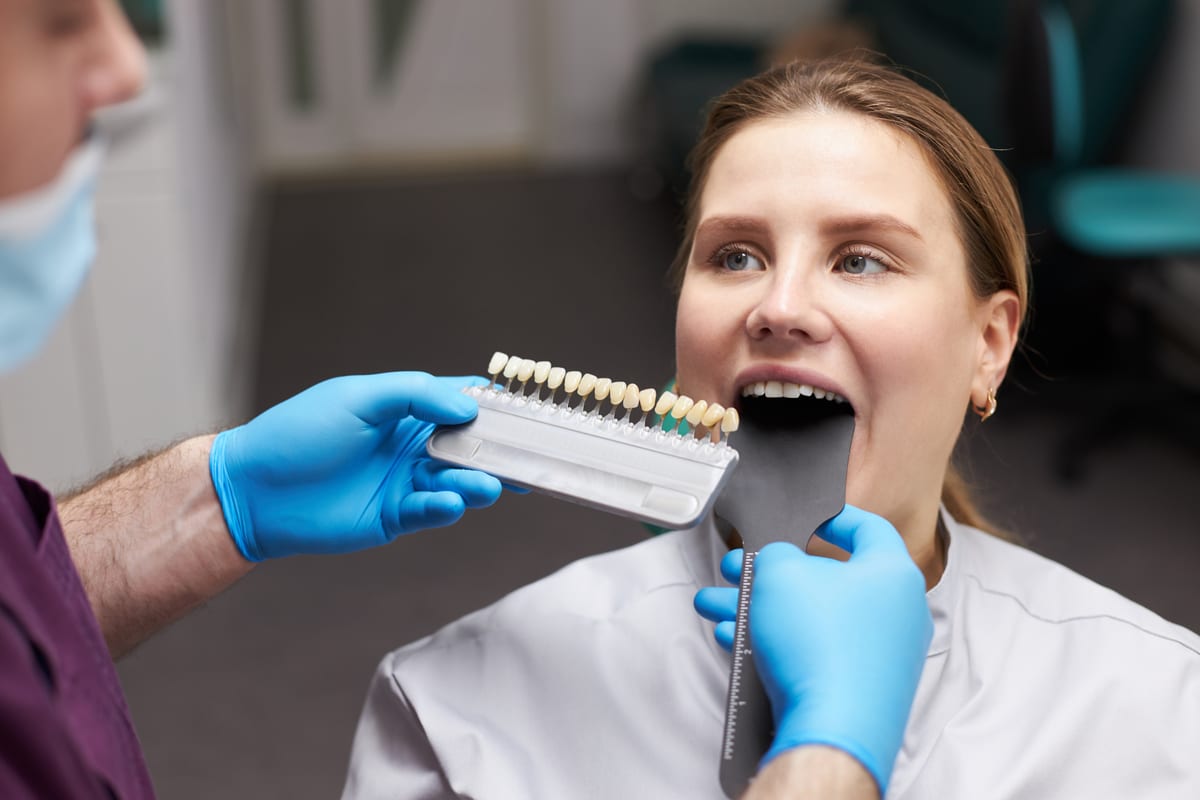
As your Cosmetic Dentist McKinney team, Dr. Kim uses the latest shade-matching technology at every step. This ensures that your veneers complement your skin tone, eye color, and facial features. No two smiles are the same, and your veneers should not be either.
The Science Behind Shade Matching and Translucency
Shade matching is one of the most important steps in the veneer process. It goes far beyond simply choosing a color from a chart. A skilled dentist evaluates the depth, tone, and brightness of your surrounding teeth. The goal is a result that is consistent and cohesive across your entire smile.
Natural teeth are not a single flat color. They have layers of color that shift depending on the light. Modern porcelain veneers replicate this layered effect beautifully. Dental ceramists can build up multiple translucent layers to produce a realistic depth.
Translucency is the key factor that separates modern veneers from older ones. When light passes through the veneer and reflects off the tooth underneath, it produces a lifelike glow. This is exactly what you see in a healthy natural tooth. Older, thicker veneers blocked this light entirely, which is why they looked so artificial.
- Shade mapping evaluates color across multiple zones of each tooth
- Layered porcelain construction mimics the depth of natural enamel
- Light transmittance testing ensures realistic translucency
- Digital imaging helps preview your result before treatment begins
Custom Design: How Veneers Are Shaped to Fit Your Unique Smile
Shape and proportion matter just as much as color. Teeth that are perfectly white but the wrong shape still look unnatural. Modern veneers are custom-designed using detailed impressions or digital scans of your mouth. This allows for precise contouring that matches your facial structure.
Dr. Kim takes facial symmetry into account during the design process. The length, width, and curve of each veneer is planned individually. Even subtle variations — like slightly rounded edges — help mimic the natural imperfections of real teeth. Uniform perfection is actually a red flag for artificial-looking smiles.
Some patients request a